On August 26 we were in Taylor, Texas for the 2026 Central Texas-Korea Summit. We went to listen, not to speak, and we left with a conclusion worth more than any headline: the corridor between South Korea and Central Texas has stopped being an investment story and become an execution problem, and whoever solves it first captures the growth.
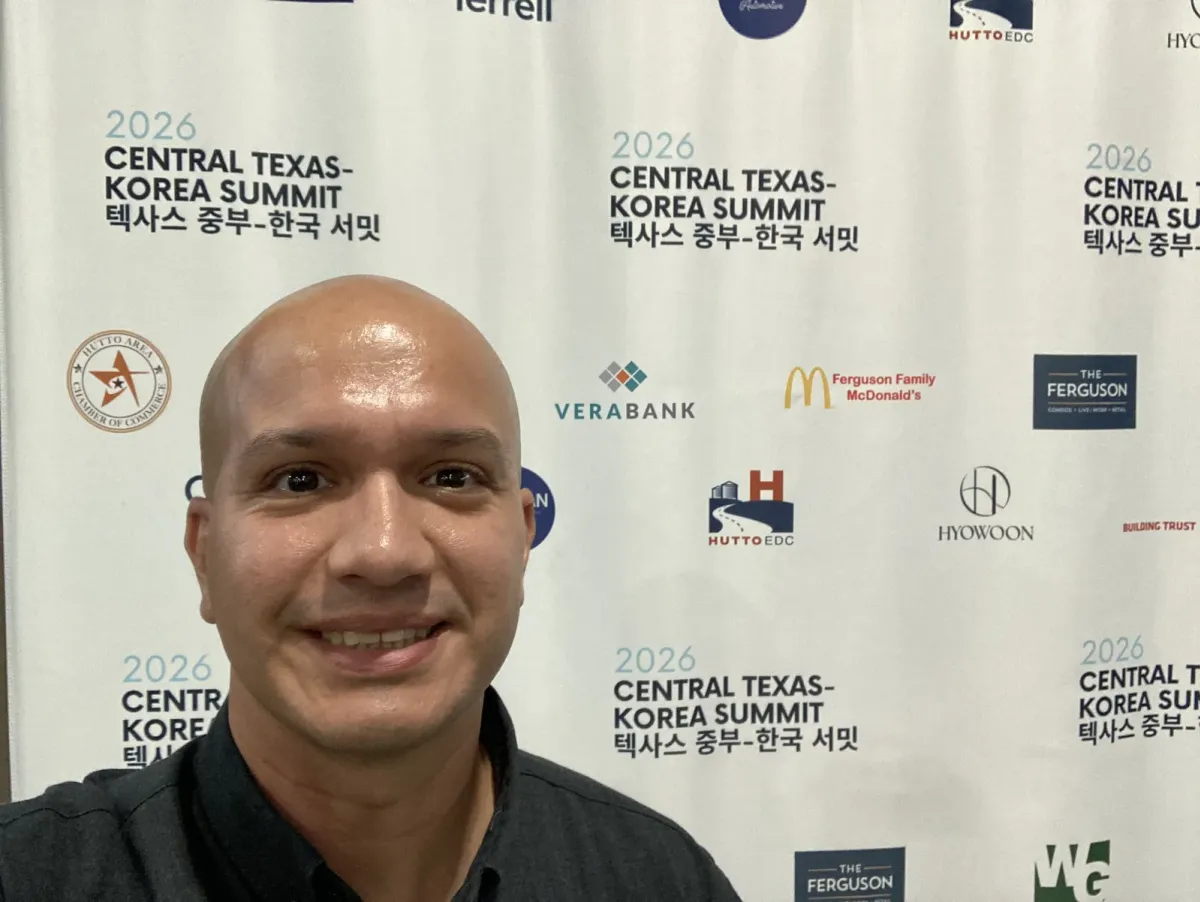
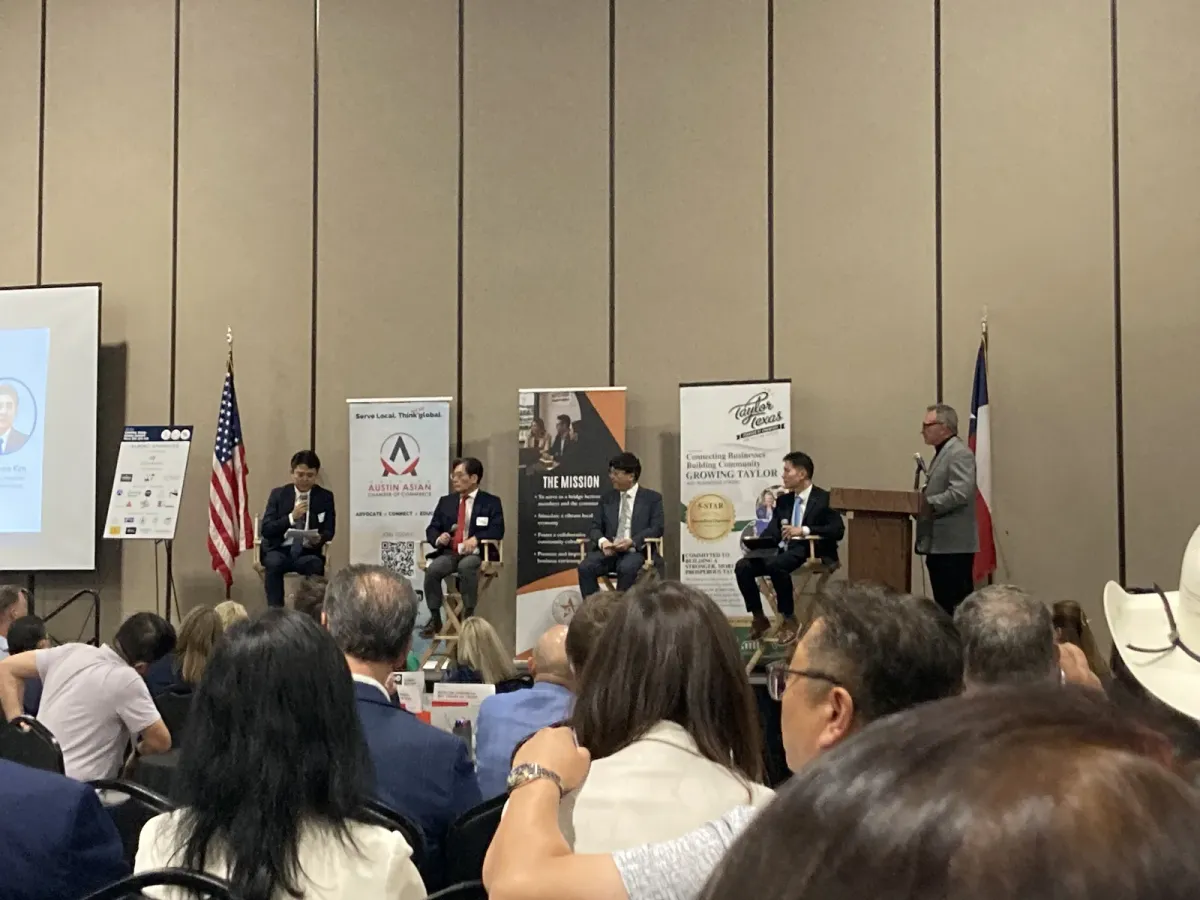
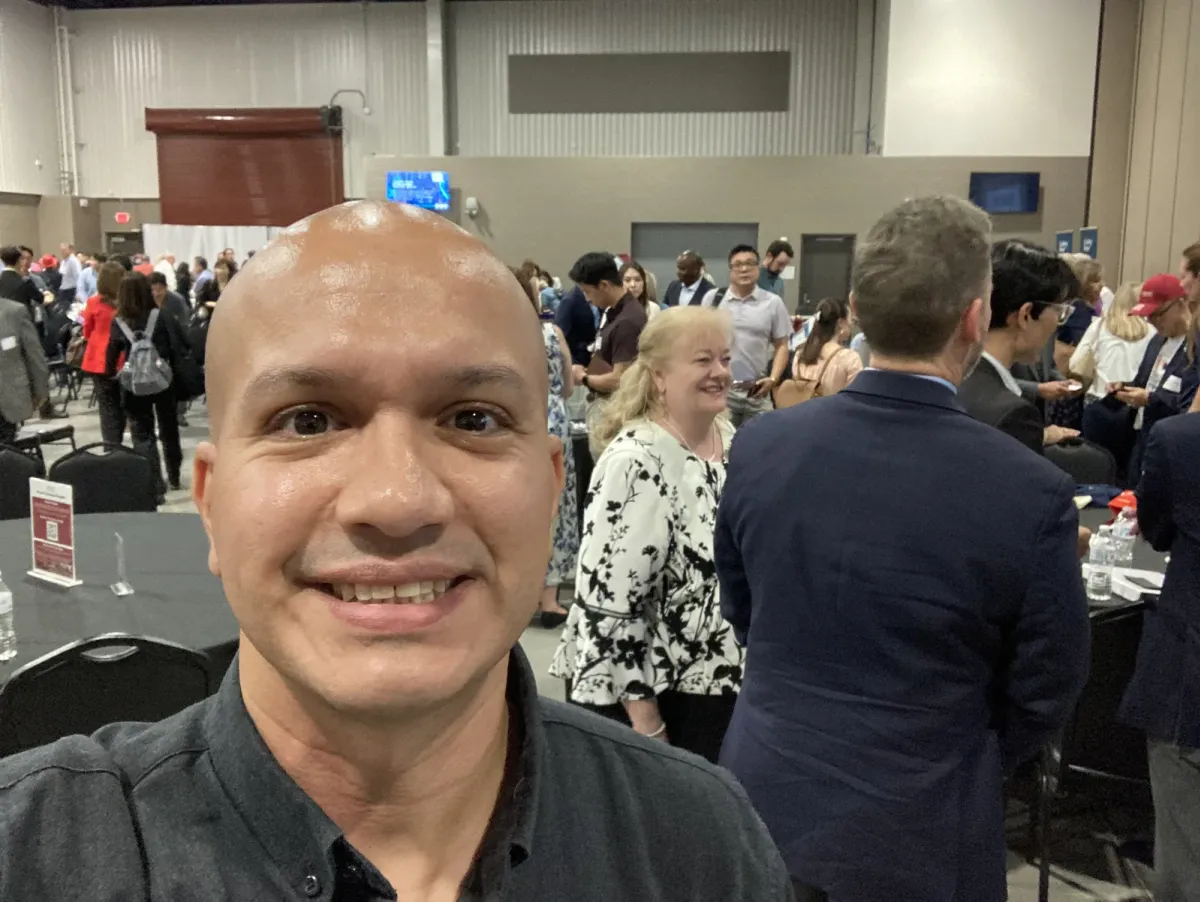
Three chambers of commerce (Greater Austin Asian, Hutto Area, and Greater Taylor) put the summit together at the Wilco Expo Center, with VeraBank as title sponsor. The room held consuls, county judges, mayors, the president of Samsung Austin Semiconductor, Korean banking, real estate developers, and the founder of a Korean beauty brand. That mix, more than any speech, is the story.
Why Taylor, Texas?
Because Samsung Austin Semiconductor is building a 17-billion-dollar plant there to manufacture 2-nanometer chips. That is the kind of investment that rewrites a place: Taylor was, in the words of its own chamber of commerce, one of the lowest-income areas of Williamson County, and today it is a node in the most strategic supply chain on the planet.
South Korea is the largest source of foreign direct investment in Texas. The Consul General described the relationship as a comprehensive strategic alliance that now reaches far beyond defense, and made a concrete ask of the state: build a one-stop support system for Korean businesses, run proactive outreach, and push investment in both directions.
What the press release leaves out
The most useful part of the evening was the panel on the real difficulties of entering the market. There was no diplomacy there. US compliance and credit history requirements stall companies that are large and creditworthy at home, simply because their history does not cross the border. Local property taxes surprise anyone who did not budget for them. And the reliability of the power and water grid is an open concern, not a rumor.
On top of that sits a friction that is not technical but temporal. Korean business culture runs on what they called bali-bali: speed, fast decisions, trust built through the relationship. US practice starts with the contract and moves deliberately. When those two logics meet without translation, the project slips and neither side understands why.
Talent is the real constraint
If you take one problem away, take this one. The Williamson County judge put it on the table without decoration: thousands of jobs are coming and there are not enough trained people to fill them. The response being assembled connects public schools, community colleges, and universities with employers, and already includes exchange programs between Korean universities, UT Austin, and Austin Community College.
This matters well beyond Texas. Any region trying to capture technology investment faces the same equation: capital moves fast, talent formation does not. The advantage goes to whoever starts the pipeline years before the plant arrives.
What we would do with this
Our read, as a company operating between Tegucigalpa and Austin: the Texas-Korea corridor is a case study in cross-border expansion, and the frictions named in that room are exactly what a Central American company faces when it opens US operations. Compliance in an unfamiliar regulatory framework, a track record that does not travel, and a commercial culture on a different clock.
None of those three is solved with a good website. They are solved by anticipating them: budgeting compliance into the design rather than patching it at the end, building the digital operation on infrastructure that survives an audit in the destination market, and accepting that the long-term relationship, not the contract, is what sustains the business.
If you are weighing that move, that is the conversation we want to have.