The visual landscape of digital marketing is going through a seismic shift. As we head into 2026, two powerful forces are colliding: the push for authentic human connection and the accelerating capabilities of Generative AI.
For technology partners like Andes Development, understanding these shifts is crucial. Design is no longer just aesthetics; it's a strategic tool for user engagement, conversion, and brand resilience in a crowded digital ecosystem.
Authenticity meets automation
The defining tension of 2026 lives right here: audiences crave realness, while AI demands efficiency.
- The craving for the human touch: After years of hyper-polished, generic content, there's a measurable return to imperfect, hand-drawn elements. That sincerity builds trust in a world of deepfakes.
- The speed of innovation: Generative AI is rapidly moving from novelty to core utility, accelerating design-to-market processes.
The most successful digital marketing strategies will harness both, using AI to automate the predictable and reserving human creativity for the authentic, trend-setting moments.
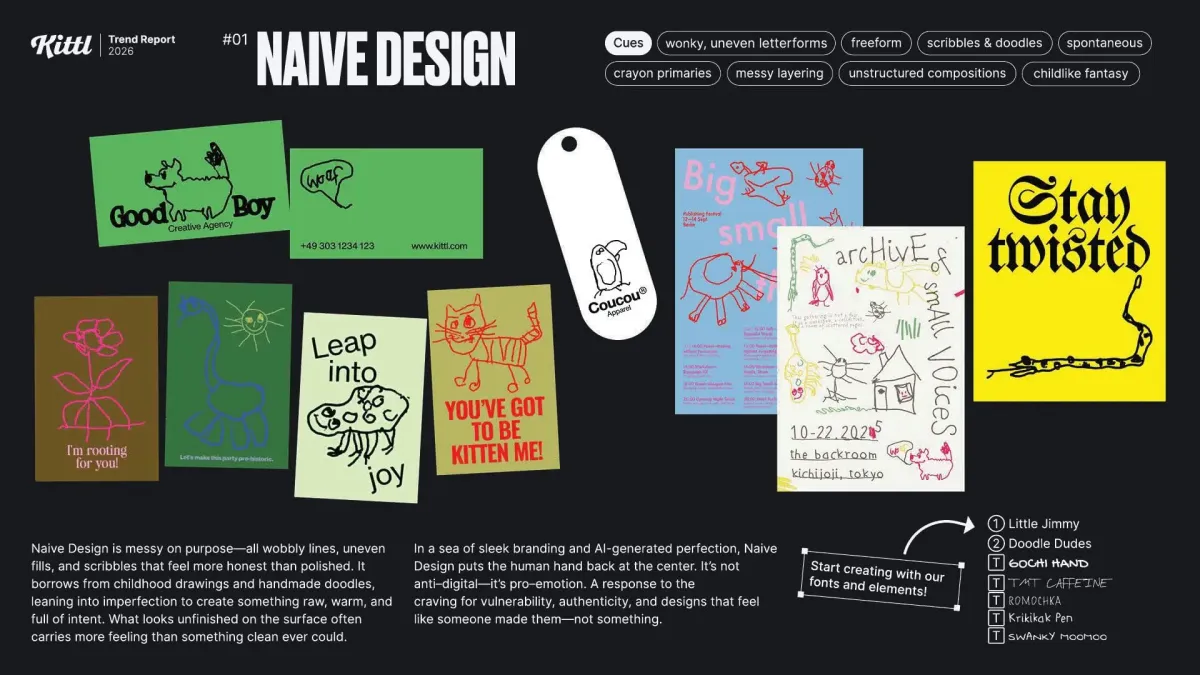
Trend #1: Naive Design
What it is: Wobbly lines, uneven fills, and childlike illustrations. It embraces the messy, human touch.
Strategy: It works as a visual antidote to "AI perfection." For brands that want to come across as approachable and honest, this trend proves a human (not an algorithm) crafted the message.
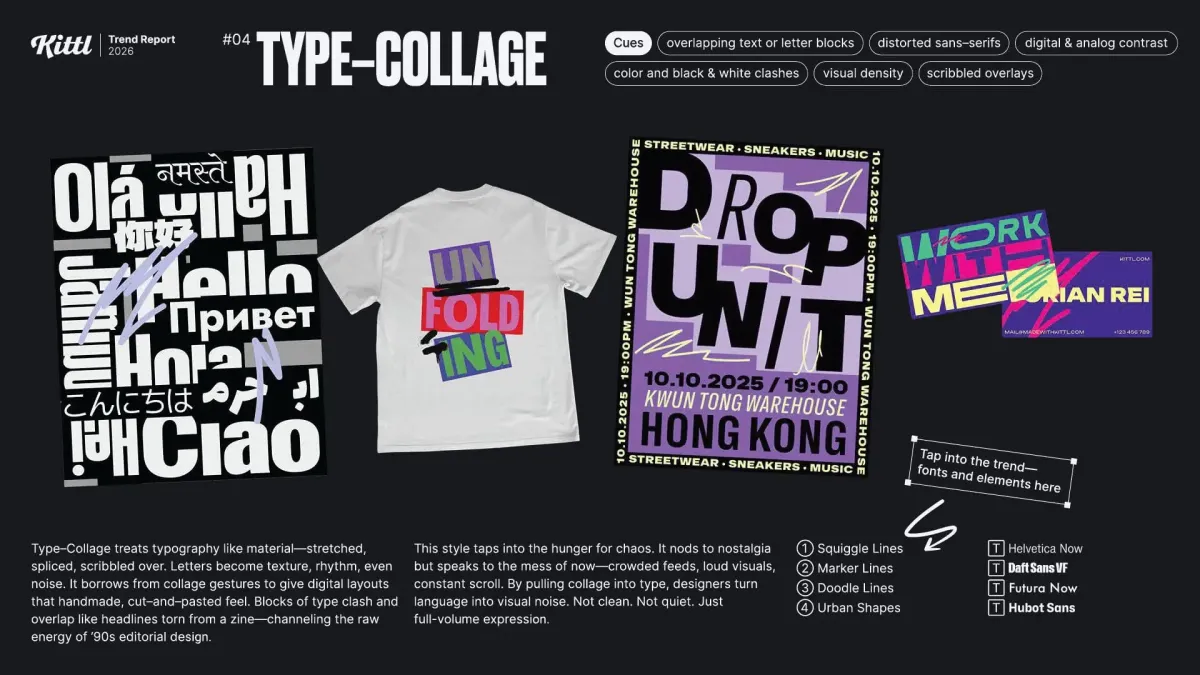
Trend #2: Type Collage
What it is: Mixing multiple fonts, sizes, and styles into a single, visually dense statement.
Strategy: This trend is built for the attention economy. It lets marketers set a mood and communicate urgency instantly in feeds where users scroll fast.
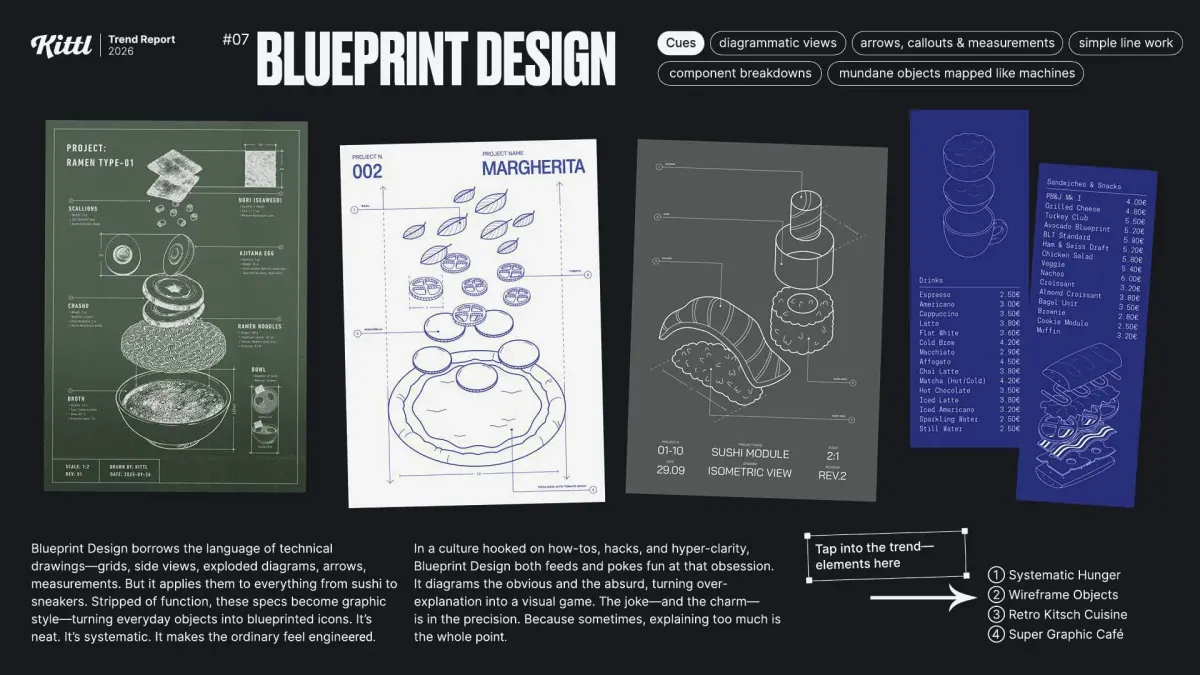
Trend #3: Blueprint Design
What it is: Using the hyper-detailed aesthetic of technical drawings, schematics, and exploded views (arrows, labels, measurements).
Strategy: It's a potent tool for B2B products. By visually "deconstructing" a service, it translates complexity into perceived precision, clarity, and engineering quality.
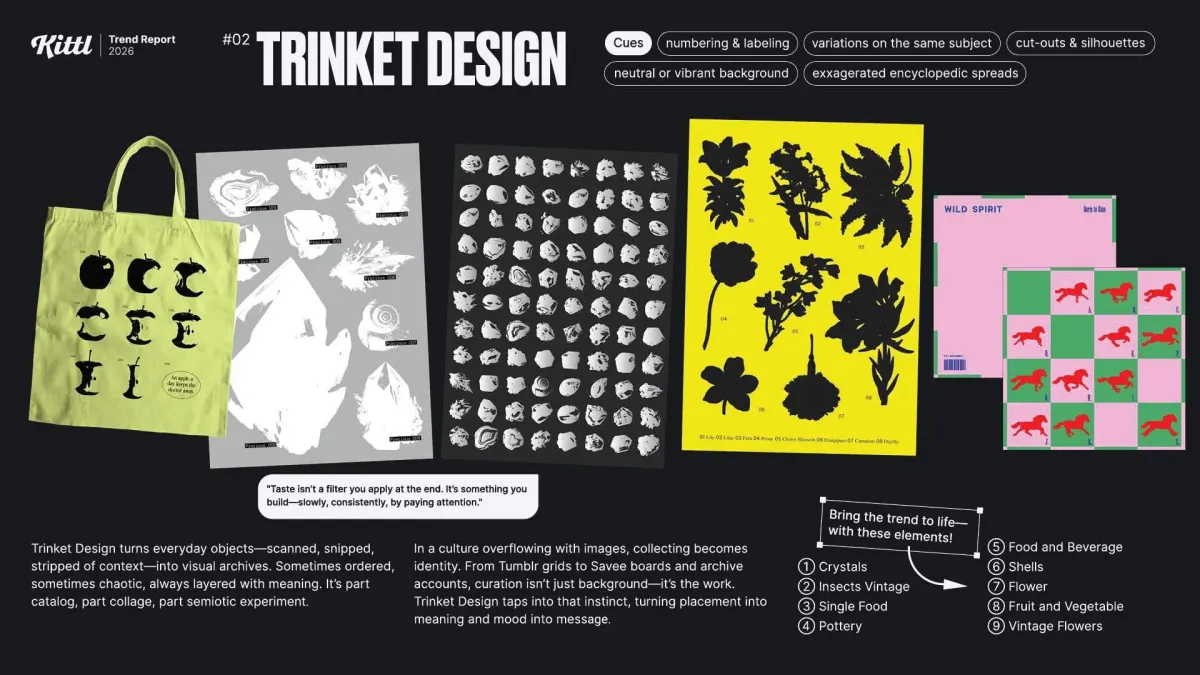
Trend #4: Trinket
What it is: Arranging small, emotionally resonant objects (crystals, vintage items) into tidy editorial layouts.
Strategy: It's about connecting with audiences on a personal, curated level. Highly effective for lifestyle, wellness, and fashion brands.
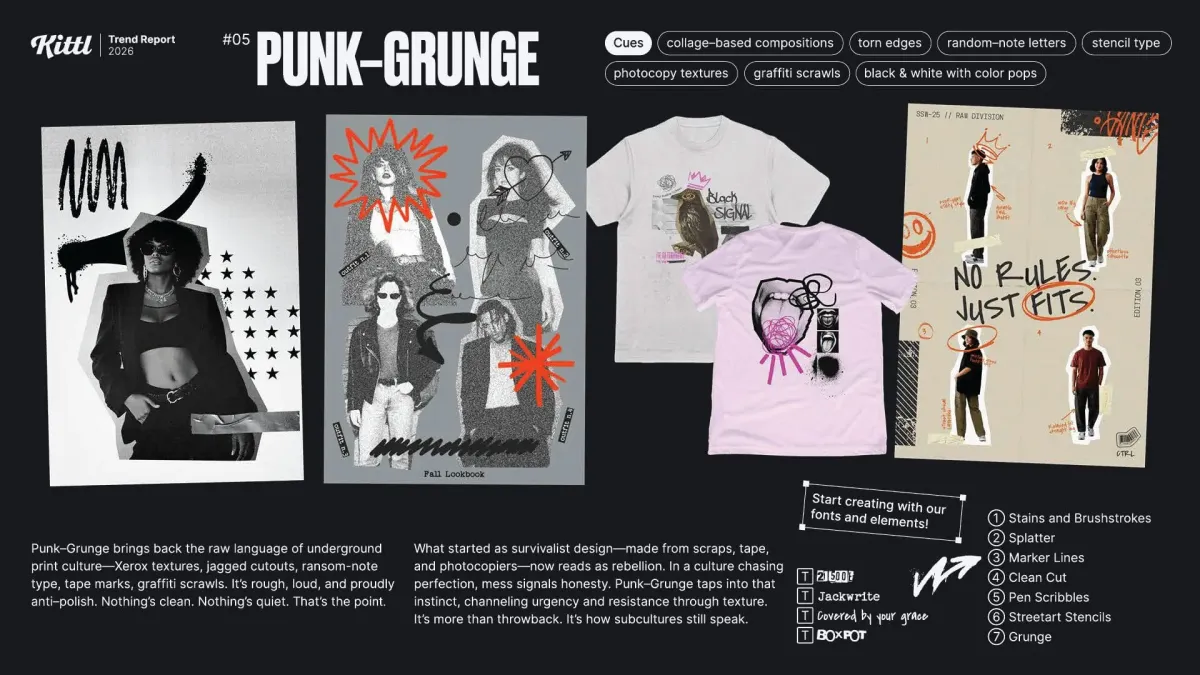
Trend #5: Punk Grunge Design
What it is: A deliberate rejection of AI-driven "perfection." It uses high-contrast textures, distorted typography, and a DIY zine aesthetic.
Strategy: In 2026, designers aren't using Punk Grunge to fight the machine; they're using it to inject soul into the algorithm. It communicates authenticity, rebellion, and deep intentionality.
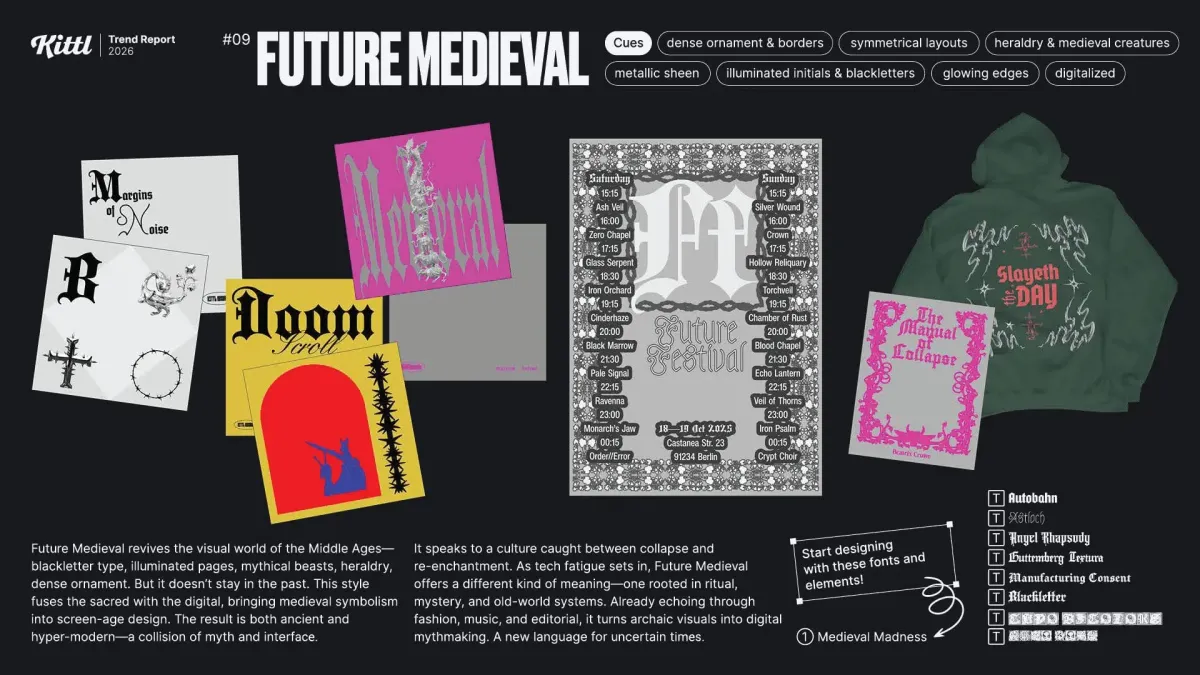
Trend #6: Medieval Future
What it is: Blending ornate, gothic, or baroque aesthetics with futuristic, glowing, or glitchy digital effects.
Strategy: Brands can use it to signal longevity, legacy, or premium status while staying on the technological cutting edge.
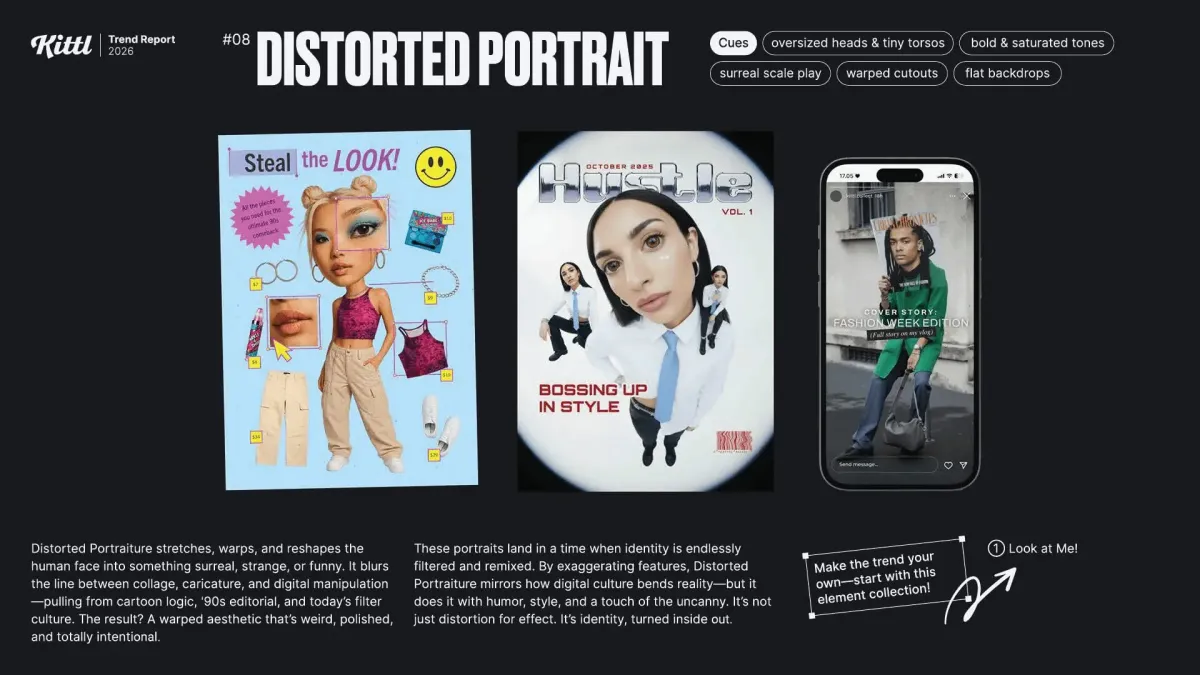
Trend #7: Distorted Portrait
What it is: A move toward surrealism where human portraits are digitally warped or altered to evoke deep emotional states.
Strategy: Audiences are growing immune to perfect AI-generated "stock faces." The distorted portrait lets brands tell deeper stories.
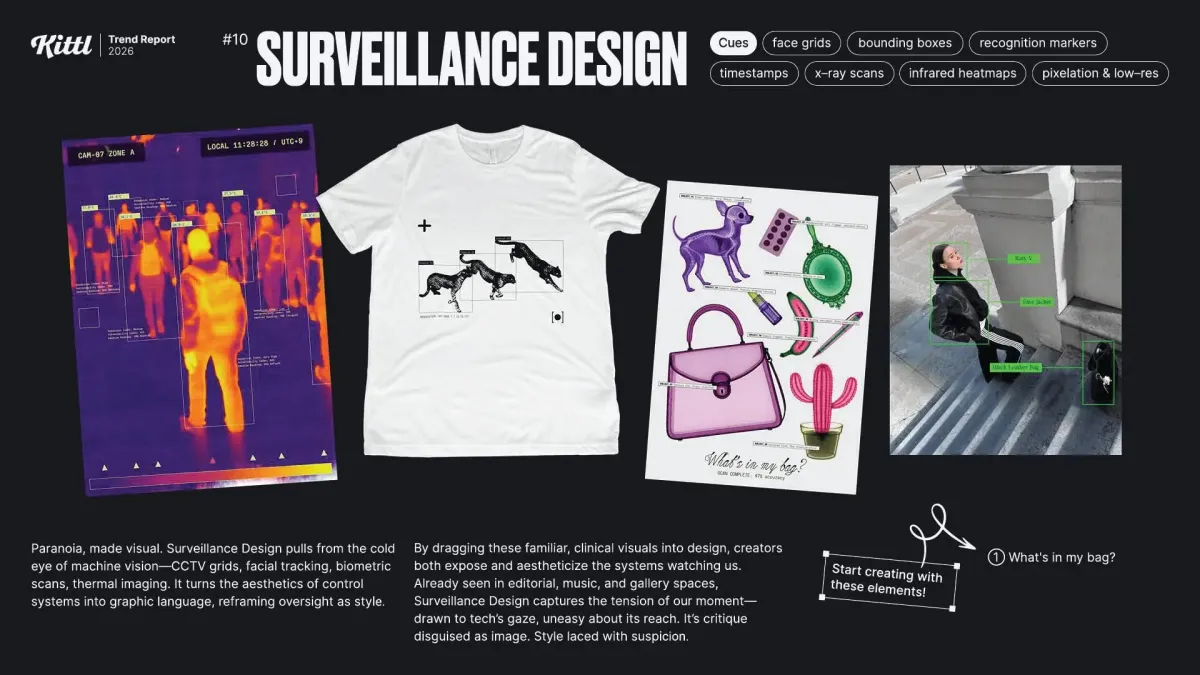
Trend #8: Surveillance Design
What it is: A visual system built from security UI elements: CCTV feeds, biometric HUDs, crosshairs, and system logs.
Strategy: It communicates observation, data flow, and conceptual sharpness. It's a versatile toolkit for brands exploring themes of risk, visibility, and data control (ideal for cybersecurity or fintech).
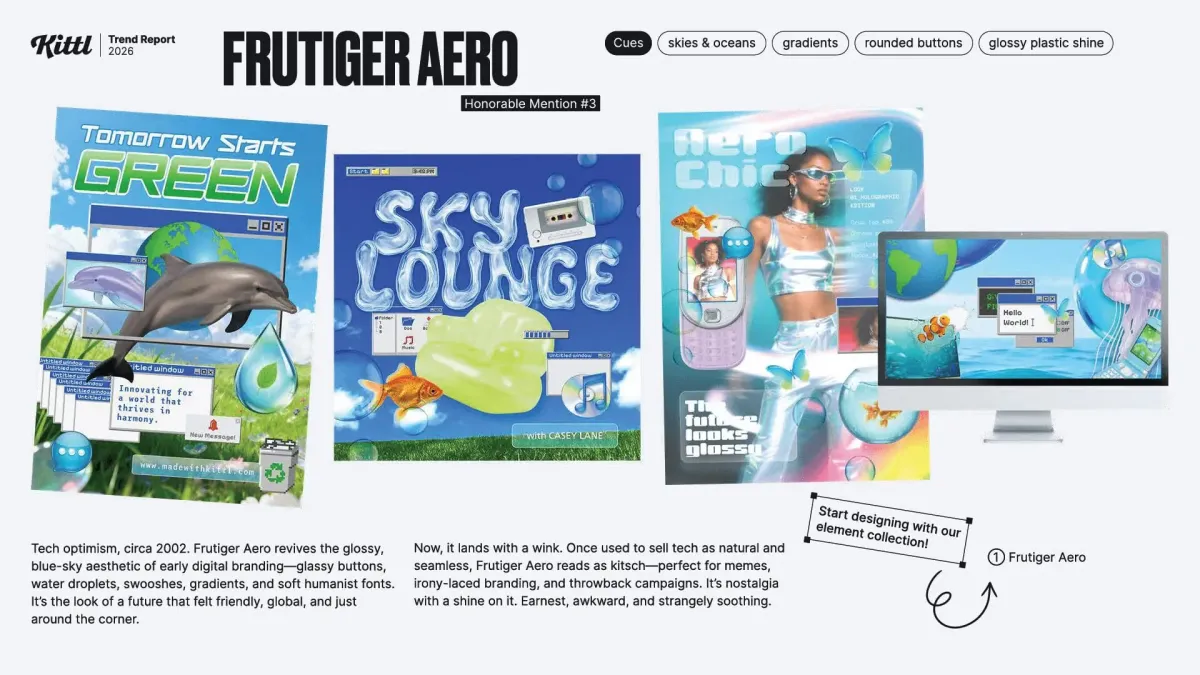
HONORABLE MENTION: Frutiger Aero
What it is: A revival of the "glossy" early-2000s look (think Windows XP wallpapers, shiny aqua gradients, and bubble-style typography).
Strategy: After a decade of flat minimalism, Frutiger Aero feels fresh again by pairing retro hopefulness with next-generation clarity.
The takeaway for leaders
These aren't passing fads. They're data-backed signals that demand flexible, intentional deployment. For Andes Development and our clients, the ability to rapidly integrate these complex visual languages is the definition of a competitive marketing advantage in 2026. Don't wait for the mainstream. Use strategic design to lead the narrative now.